
Gelatin is found in thousands of everyday products, including candies, marshmallows, desserts, yogurt, medicines, capsules, and many processed foods. While the ingredient itself is common, its source determines whether it is suitable for a halal diet.
Many consumers assume that all gelatin is the same, but that is not the case. Gelatin can come from pigs, cattle, fish, poultry, or even plant-based alternatives that provide similar functionality. For Muslims, understanding these sources is essential when making informed food choices.
In this guide, we'll explain where gelatin comes from, which sources are generally considered halal or haram, and why ingredient verification remains important.
Understanding Gelatin Sources
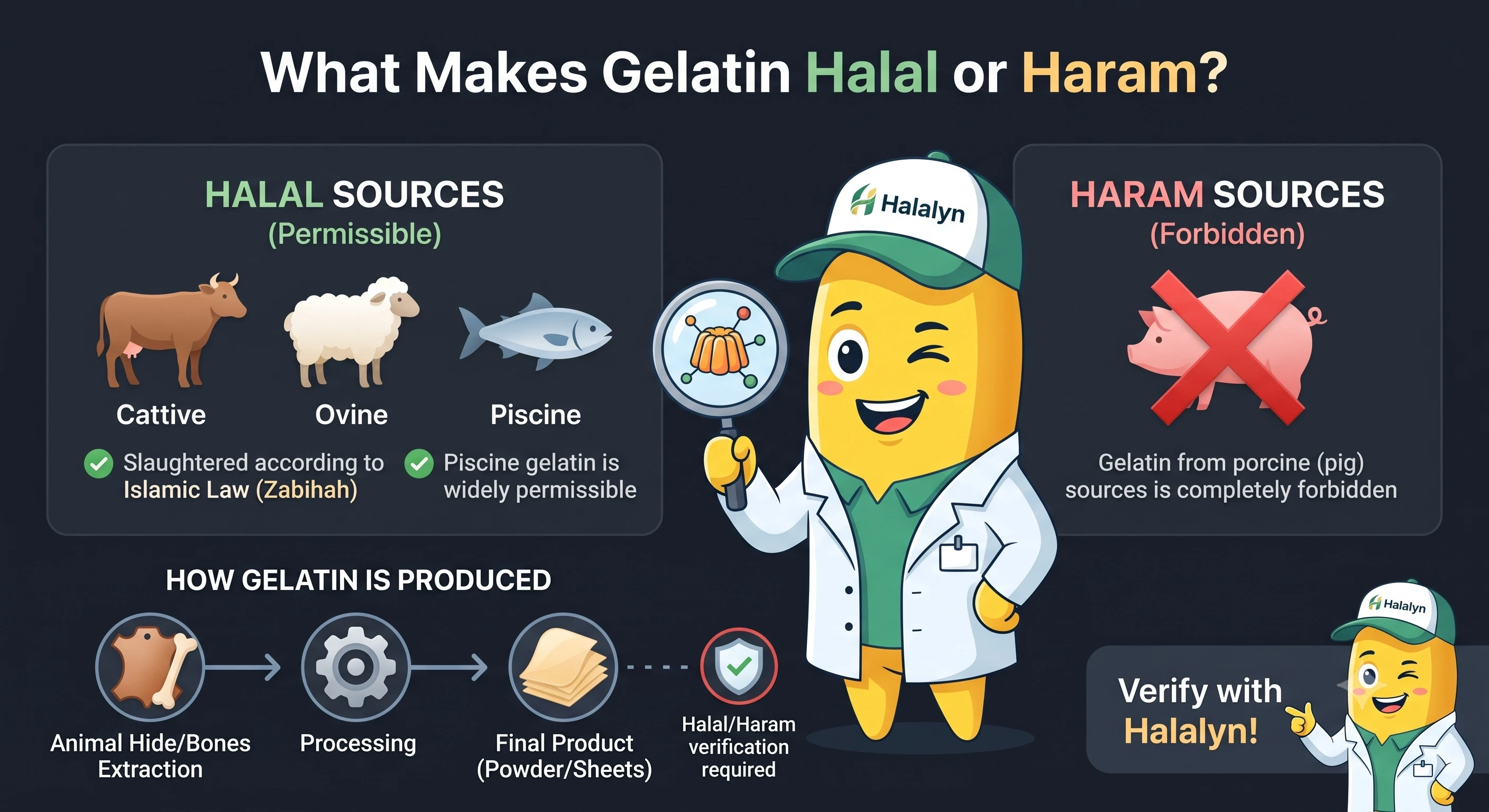
This infographic summarizes the most common gelatin sources found in food products. While some sources are clearly prohibited, others require additional verification because the halal status depends on how the animal was sourced and processed.
Sources That Should Be Avoided
- Pork-derived gelatin is prohibited.
- Gelatin from animals not slaughtered according to Islamic requirements is generally not considered halal.
Because ingredient labels often list only "gelatin" without identifying the source, consumers should exercise caution whenever the origin cannot be confirmed.
Sources That May Be Halal
Halal-certified bovine gelatin
Beef gelatin may be halal if it comes from cattle slaughtered according to Islamic requirements and certified by a trusted halal certification body.
Fish gelatin
Fish gelatin is generally considered permissible by many scholars because fish do not require ritual slaughter in the same way as land animals.
Poultry gelatin
Chicken-derived gelatin can be halal when the poultry has been slaughtered according to Islamic requirements and properly certified.
Plant-Based Alternatives
Many manufacturers now use ingredients that provide similar texture without using animal-derived gelatin.
Examples include:
- Agar
- Pectin
- Carrageenan
These alternatives are popular in vegetarian, vegan, and many halal-friendly products, although the overall product should still be checked for other ingredients.
Why Ingredient Verification Matters
Many packaged foods simply list:
Gelatin
without explaining its source.
That means consumers cannot determine whether it comes from pork, cattle, poultry, fish, or another source based on the label alone.
Whenever the source is unclear, additional verification through reliable information or halal certification is recommended.
How Halalyn Helps
Instead of relying solely on ingredient names, Halalyn combines ingredient knowledge, product data, and halal analysis to help users better understand packaged food ingredients and make more informed purchasing decisions.
Conclusion
Understanding gelatin begins with understanding its source.
While pork-derived gelatin should be avoided and plant-based alternatives are generally suitable, many other forms of gelatin require additional verification before they can be confidently classified as halal.
By checking ingredients carefully and using reliable verification tools, consumers can make informed choices that align with their dietary and religious values.
Editorial & Research Board
Official Halalyn food science, ingredient analysis, and dietary policy editorial team.