What Is Gelatin?
Gelatin is a protein obtained by breaking down collagen, which is naturally found in the skin, bones, and connective tissues of animals. During manufacturing, collagen is processed into a colourless and flavourless substance that forms a gel when mixed with water.
Because of its unique gelling properties, gelatin is widely used in food production, pharmaceuticals, cosmetics, and dietary supplements. It improves texture, stabilises products, and creates the chewy consistency found in many popular foods.
The source of the collagen determines whether the gelatin may be considered halal, haram, or suitable for vegetarians.
Where Does Gelatin Come From?
Commercial gelatin is commonly produced from three main animal sources:
- Pig skin (porcine gelatin)
- Cow hides and bones (bovine gelatin)
- Fish skin and scales (fish gelatin)
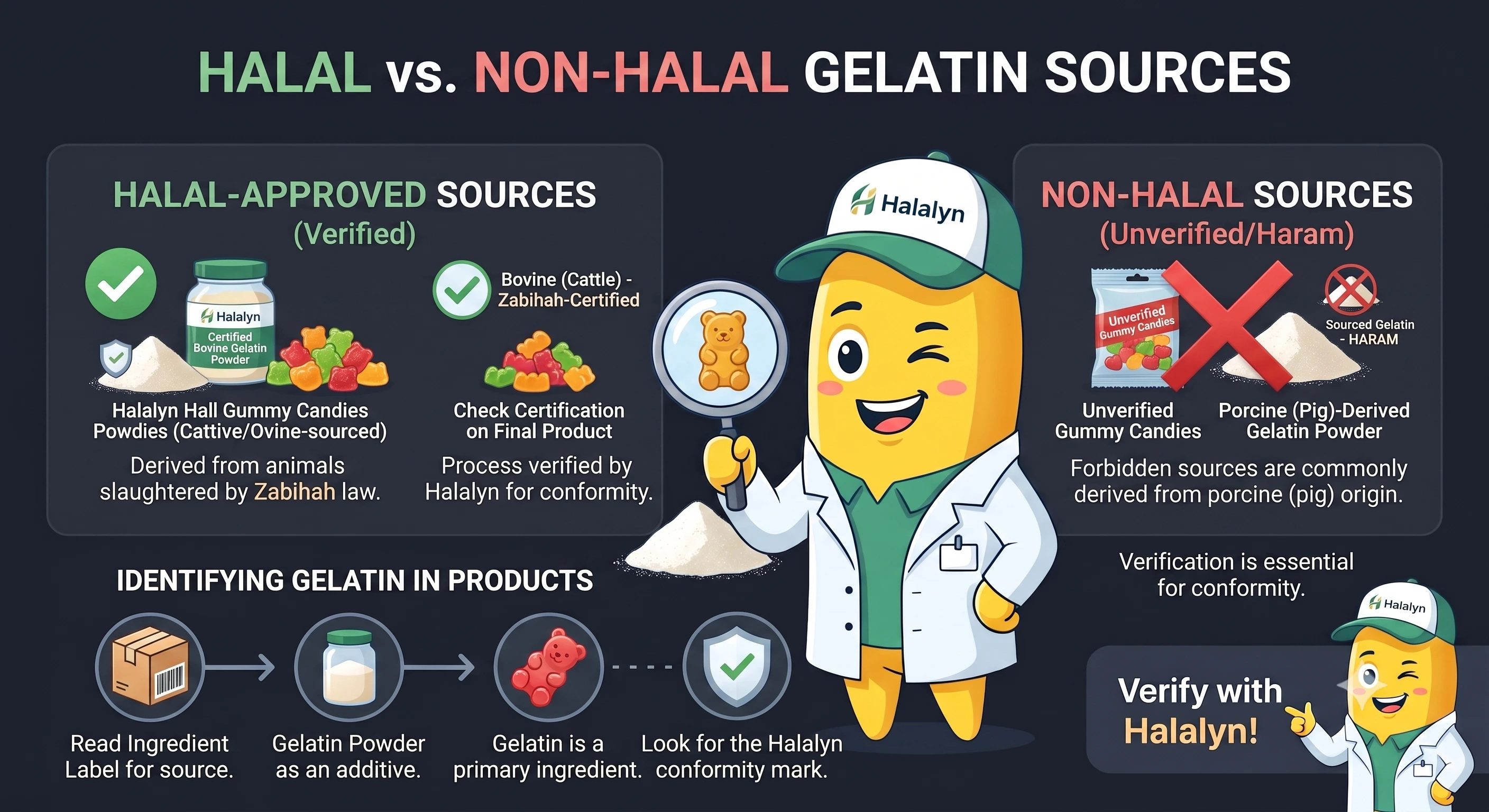
Porcine gelatin is not considered halal and should always be avoided by Muslims.
Bovine gelatin may be halal if it comes from cattle slaughtered in accordance with Islamic requirements and is certified by a recognised halal certification body.
Fish gelatin is generally regarded as halal because fish do not require ritual slaughter in the same way as land animals.
How Can You Tell If Gelatin Is Halal?
Reading the ingredient list alone is often not enough because many products simply list "gelatin" without mentioning its source.
The safest approach is to:
- Look for a trusted halal certification logo.
- Contact the manufacturer if the source is unclear.
- Use reliable halal food databases or barcode scanners.
- Avoid products with unknown gelatin sources if no clear information is available.
Making informed choices helps ensure that the products you consume align with your dietary requirements.
Is Gelatin Vegan?
No. Traditional gelatin is made from animal collagen and is therefore not suitable for vegans or vegetarians.
Several plant-based alternatives provide similar texture in foods, including:
- Agar-agar
- Carrageenan
- Pectin
- Konjac
These ingredients are commonly used in vegan desserts and confectionery.
Final Thoughts
Gelatin itself is not automatically halal or haram. Its permissibility depends on where it comes from and how it is processed.
When shopping, always check for halal certification or choose products from trusted manufacturers. If the source is unknown, using reliable ingredient verification tools can help you make informed decisions.
Understanding ingredient sources is one of the easiest ways to avoid doubtful foods and maintain confidence in your daily purchases.
Frequently Asked Questions
Is all-beef gelatin halal?
No. Beef gelatin is halal only if it comes from cattle slaughtered in accordance with Islamic requirements and is certified by a recognised halal authority.
Is fish gelatin halal?
Fish gelatin is generally considered halal because fish do not require ritual slaughter like land animals.
Is gelatin vegetarian?
No. Traditional gelatin is produced from animal collagen.
Can Muslims eat products containing gelatin?
Only when the gelatin source is halal-certified or otherwise confirmed to meet Islamic dietary requirements.
Read also:
What Makes Gelatin Halal or Haram? A Complete Guide to Gelatin Sources
Editorial & Research Board
Official Halalyn food science, ingredient analysis, and dietary policy editorial team.